
Gaussian Splatting, in practice
Field-tested guides for converting, compressing, cleaning, comparing, and annotating 3DGS models. Each article is built around a real workflow you can run in your browser.
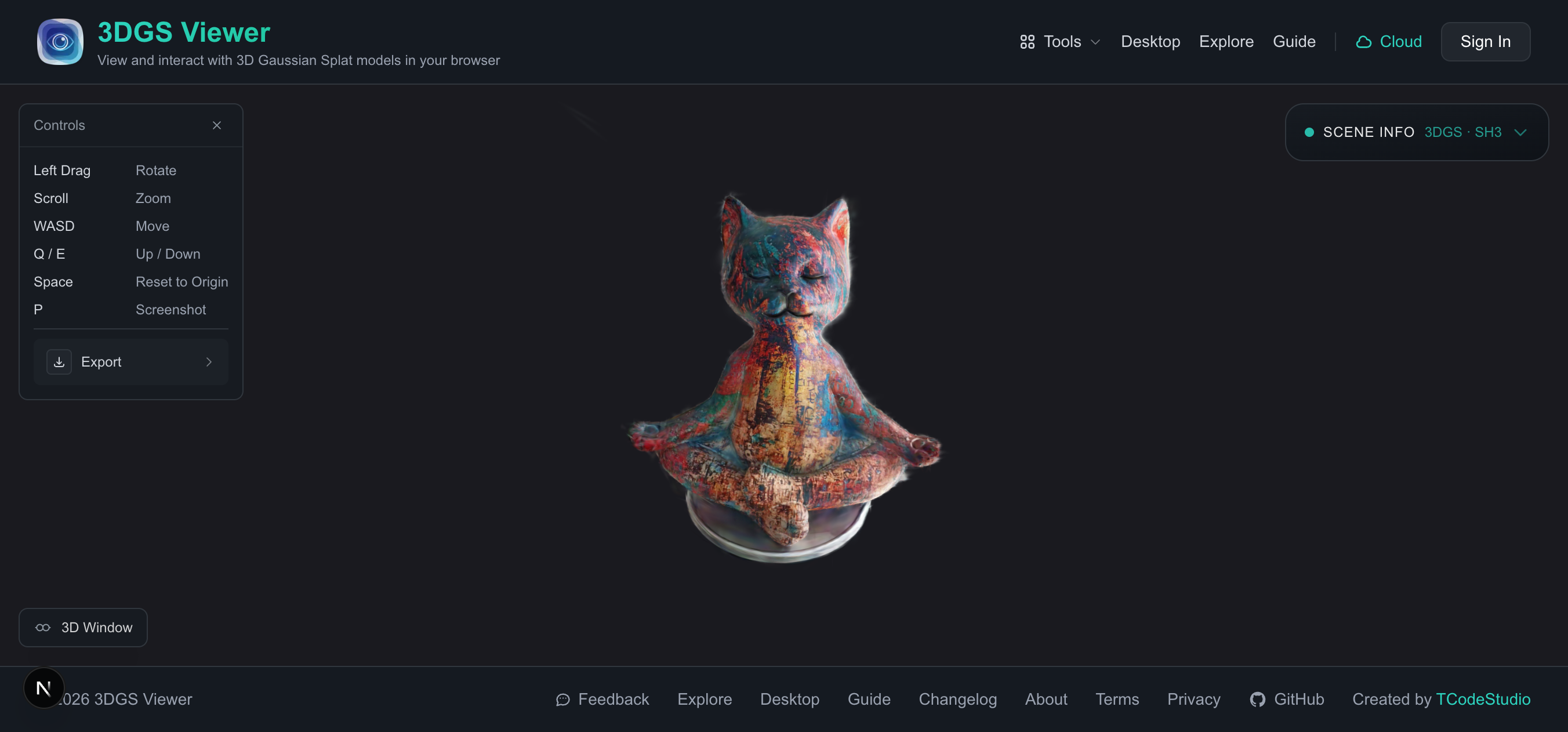
Gaussian Splatting Formats: PLY, SPZ, SPLAT, KSPLAT, SOG
A practical comparison of 3DGS file formats: per-splat size, compression ratios, design goals, viewer support, and when to use each one.
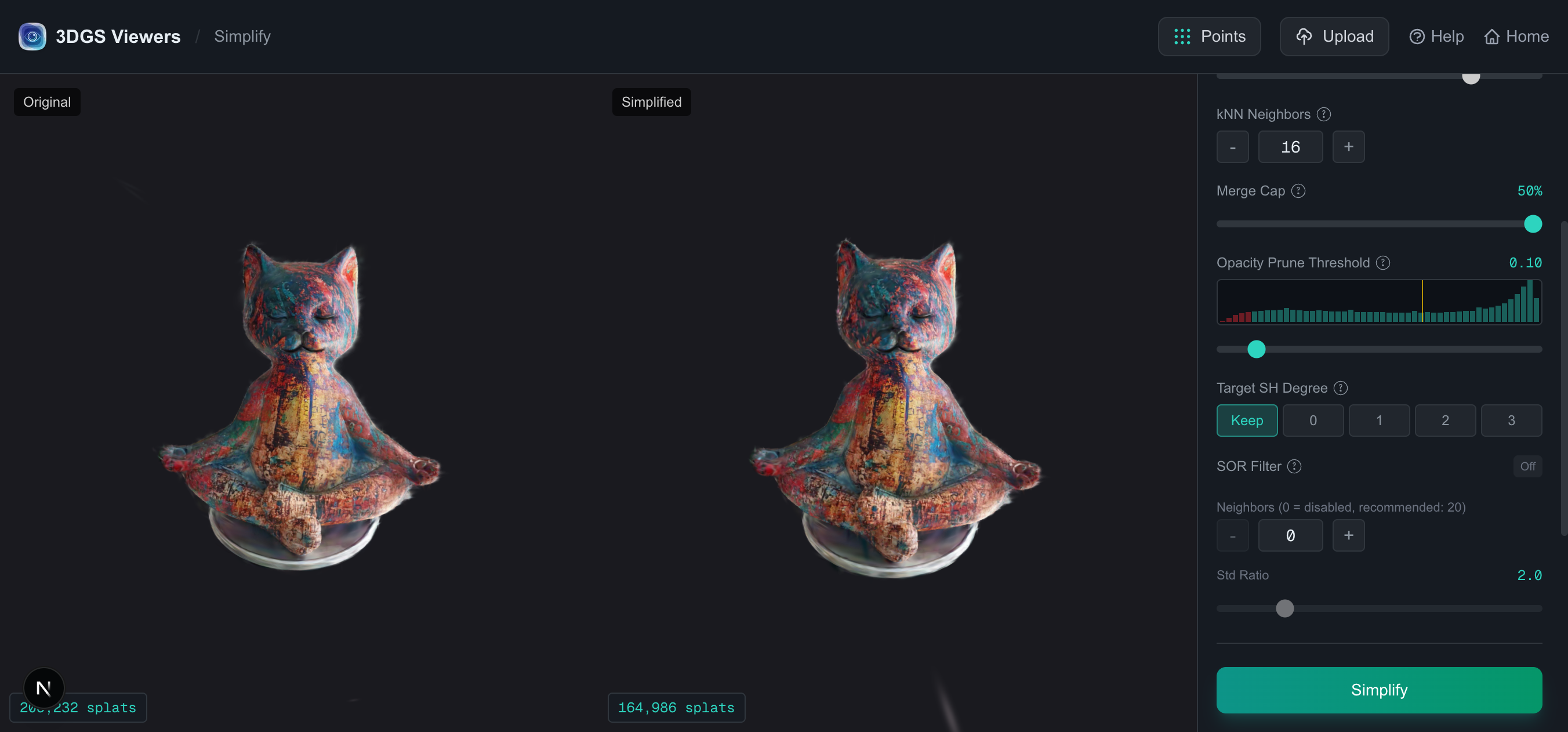
How to Compress 3DGS Models Without Losing Quality
Reduce 3DGS file size by tuning reduction ratio, opacity pruning, and SH compression. A practical workflow with real SSIM numbers and before/after examples.
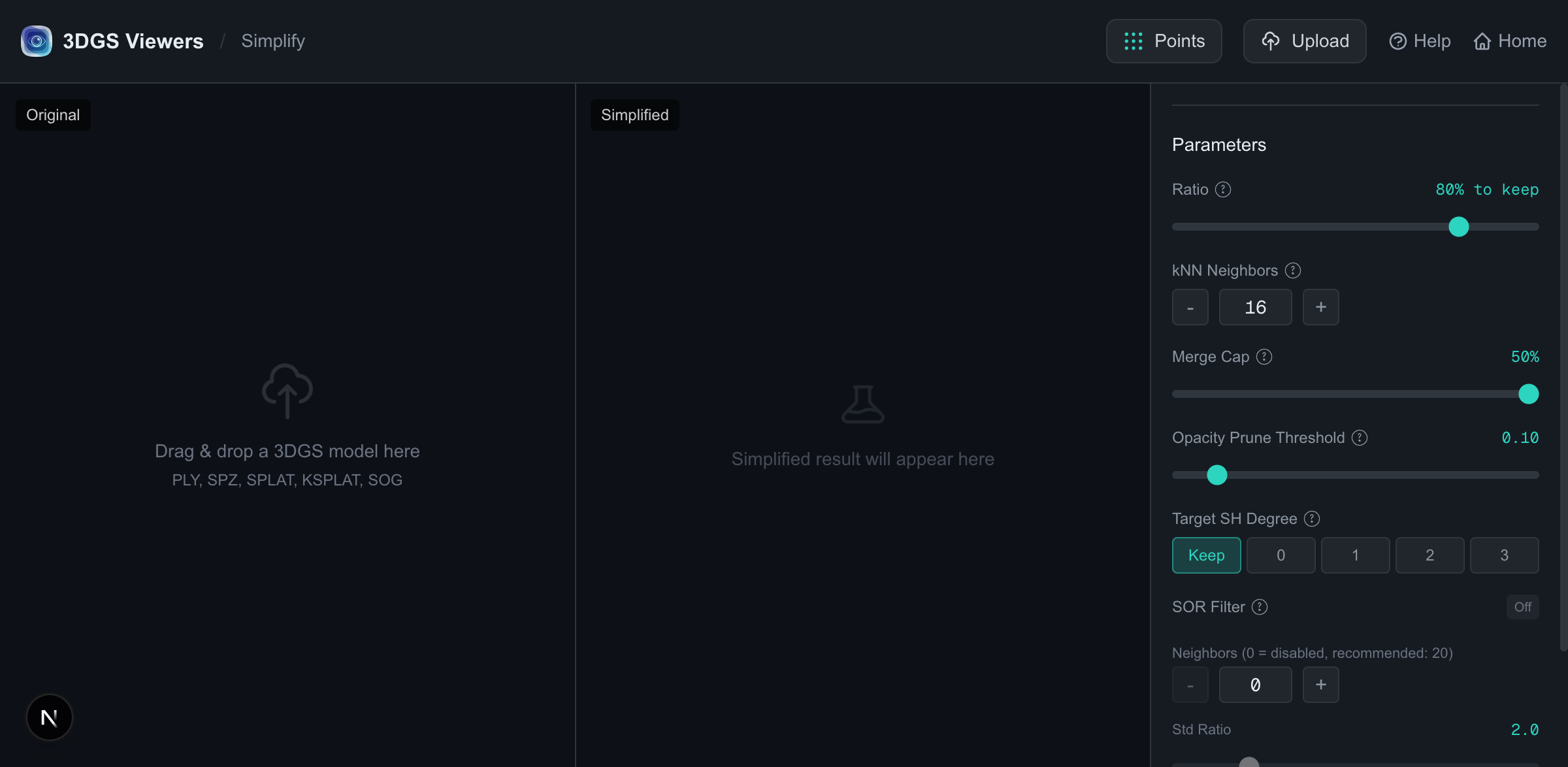
Tuning kNN and Opacity Pruning in 3DGS Simplification
A field guide to the seven parameters that control 3DGS simplification: ratio, kNN, merge cap, opacity prune, SH degree, and SOR outlier filtering.
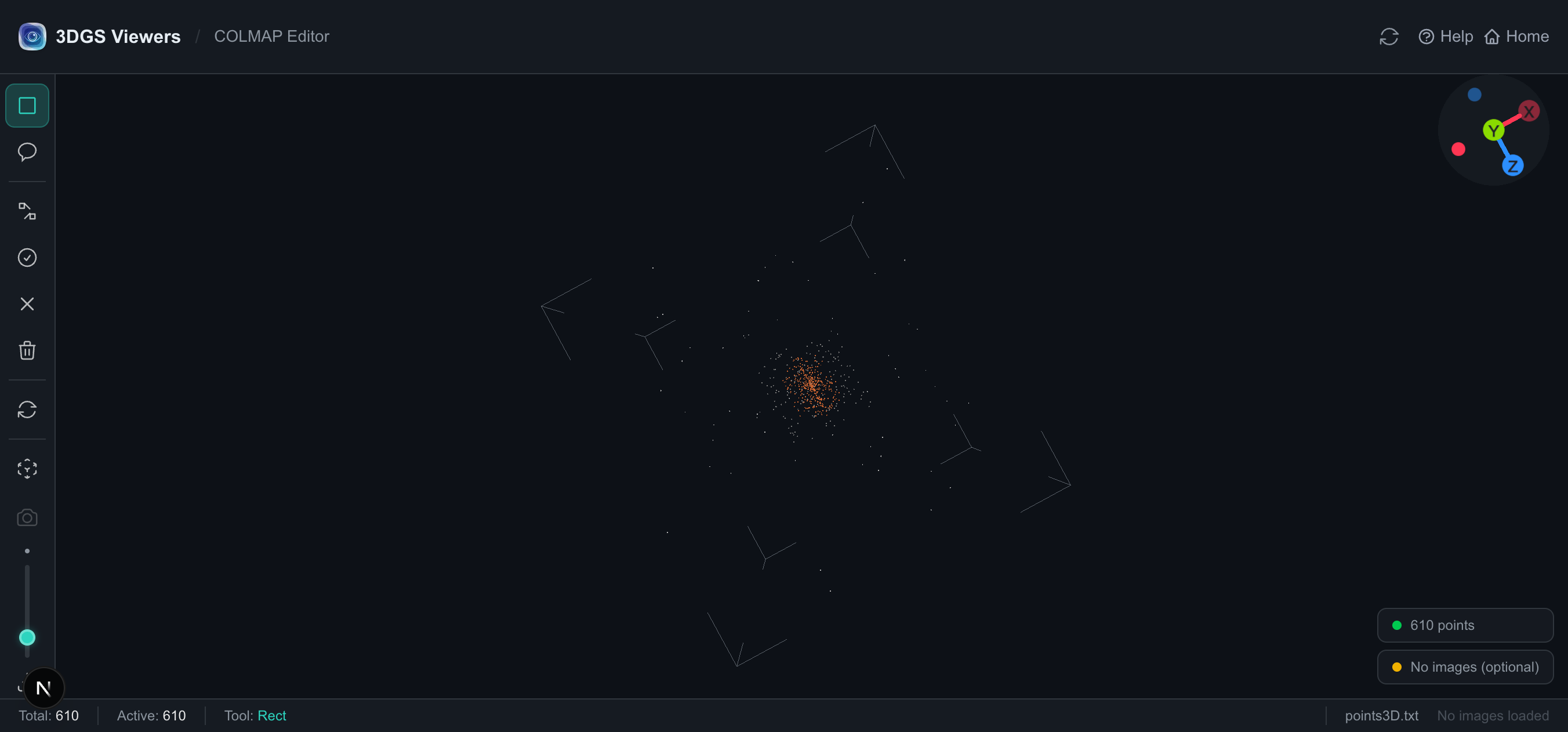
How to Clean COLMAP Point Clouds Before 3DGS Training
Sparse point clouds from COLMAP often contain outliers that destabilize 3DGS training. Learn to inspect, select, and remove bad points before training.
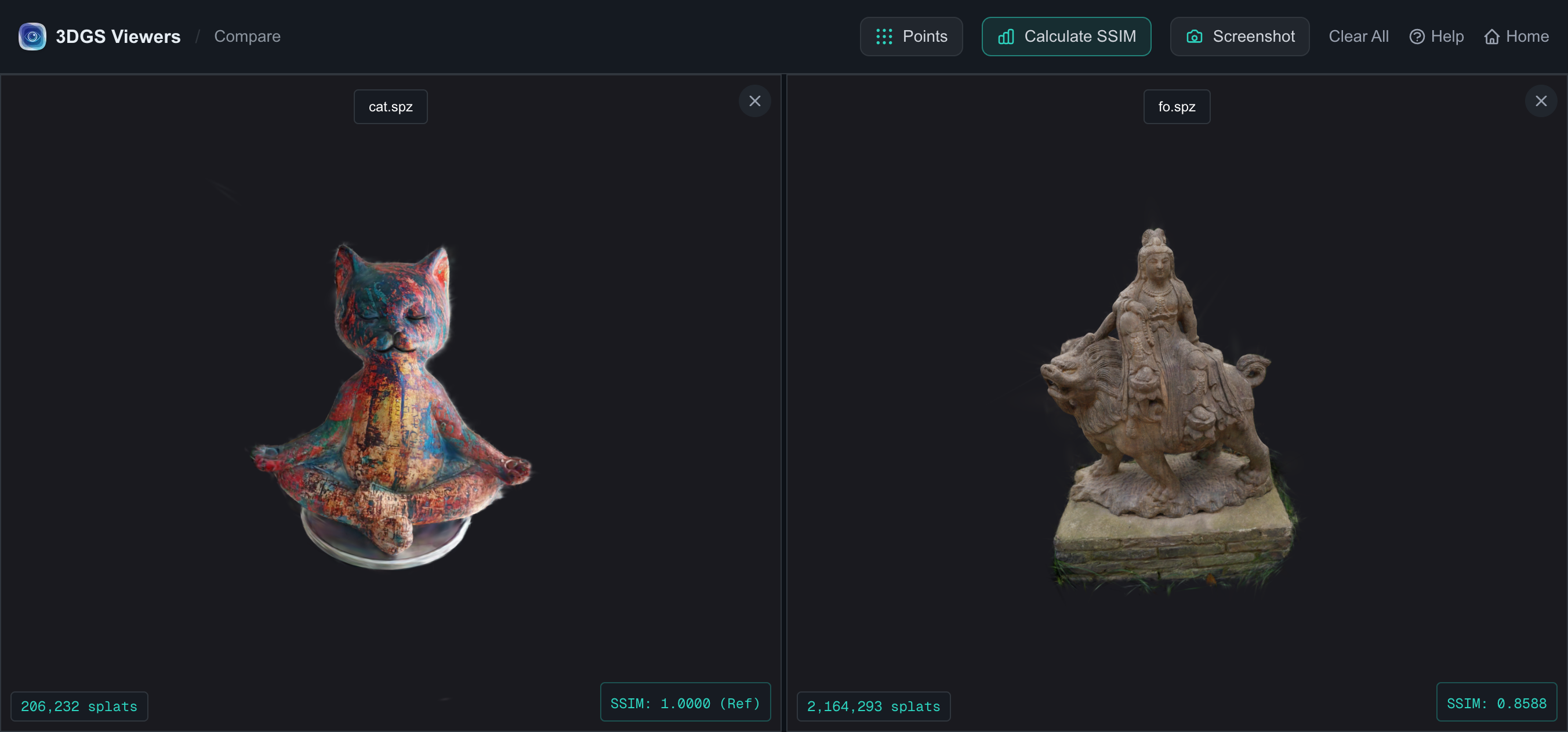
Comparing 3DGS Training Runs: Spot Quality Differences
A side-by-side workflow for evaluating 3DGS training runs, simplification results, and format conversions with synchronized cameras and SSIM scoring.
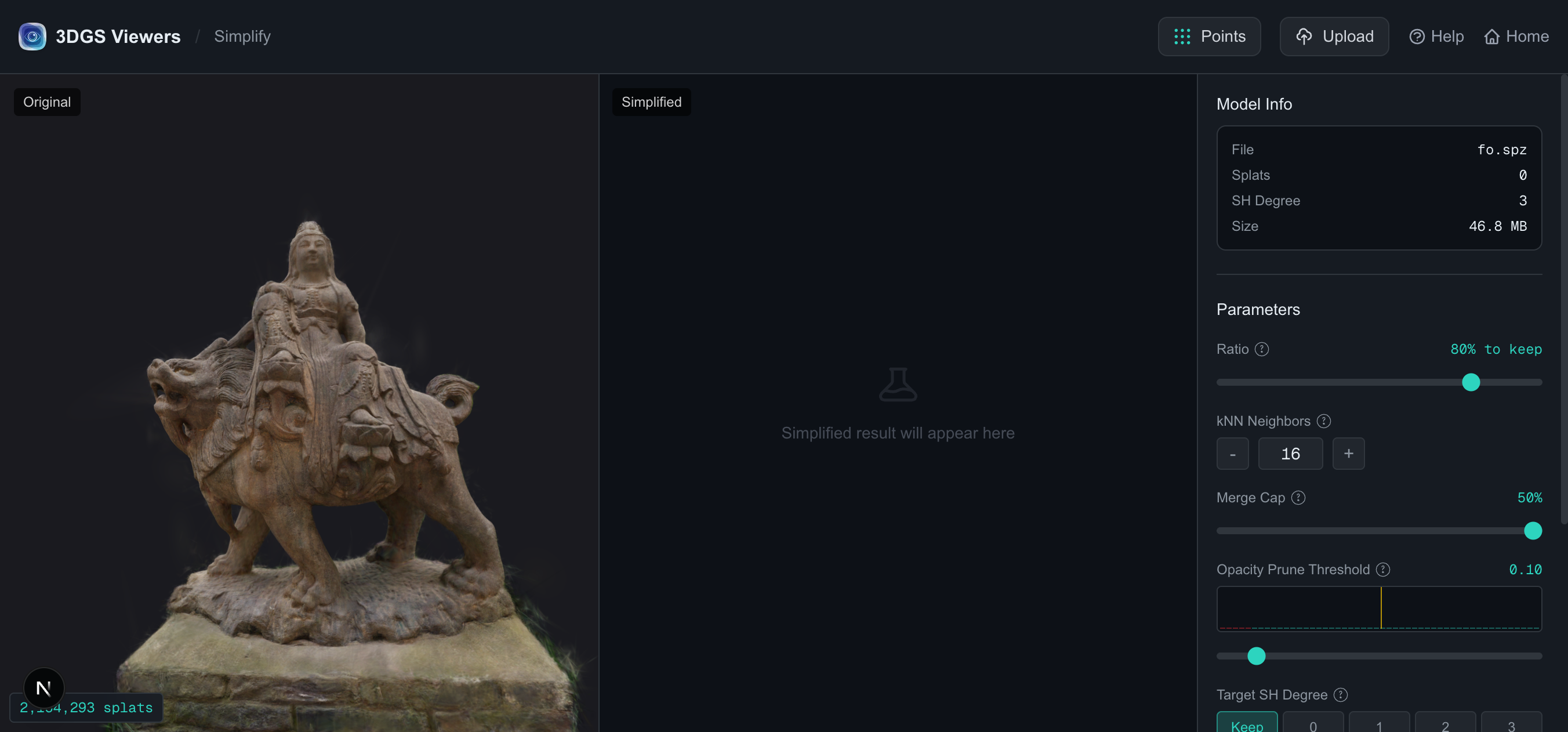
Remove Floaters and Outliers from Gaussian Splatting
Floaters and isolated Gaussians are the most common 3DGS artifact. Two practical approaches: statistical outlier removal and opacity-based pruning.
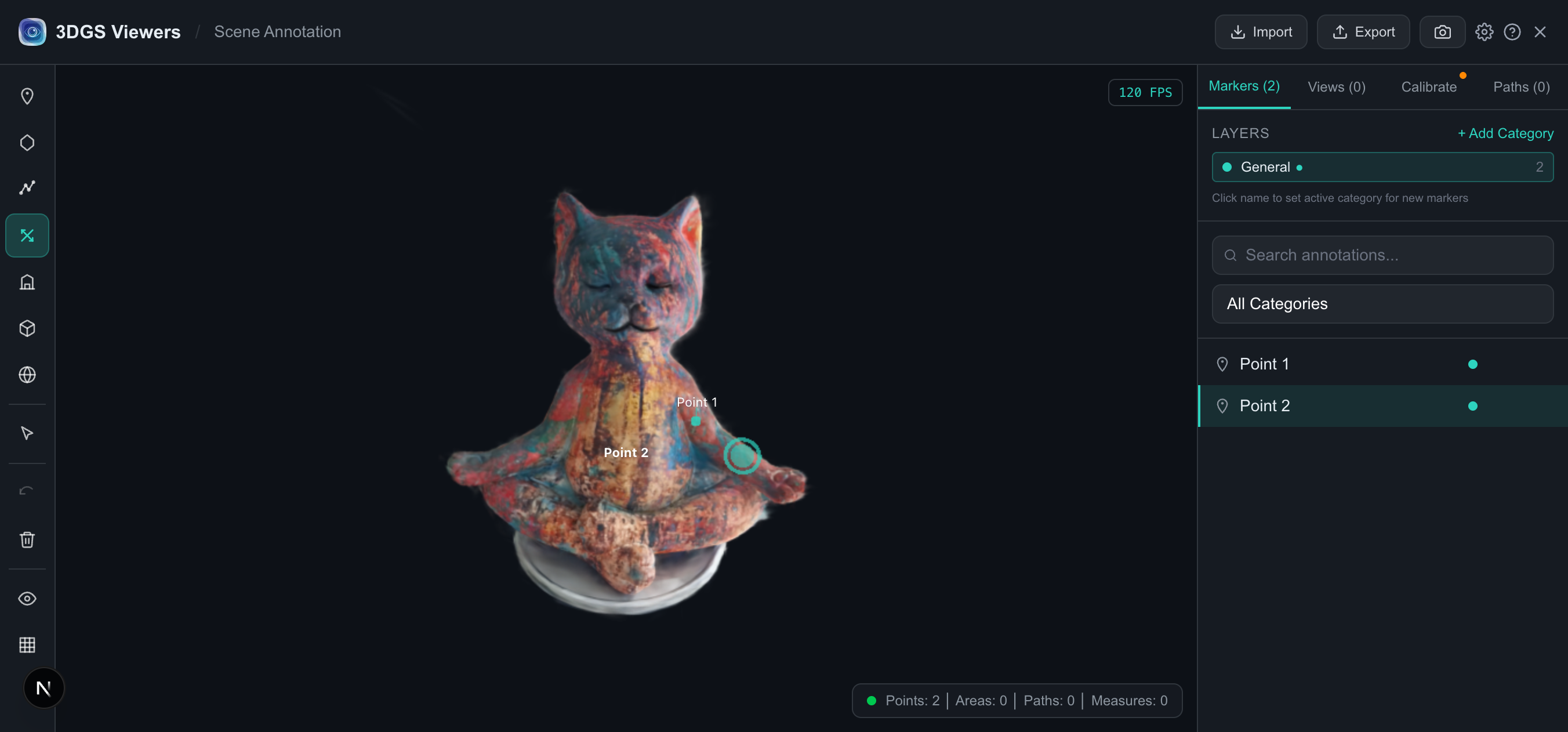
How to Annotate and Measure 3D Gaussian Splatting Scenes
Add markers, measurements, and areas to 3DGS scenes for review, documentation, and QA. A practical guide to the annotation toolset and export workflow.
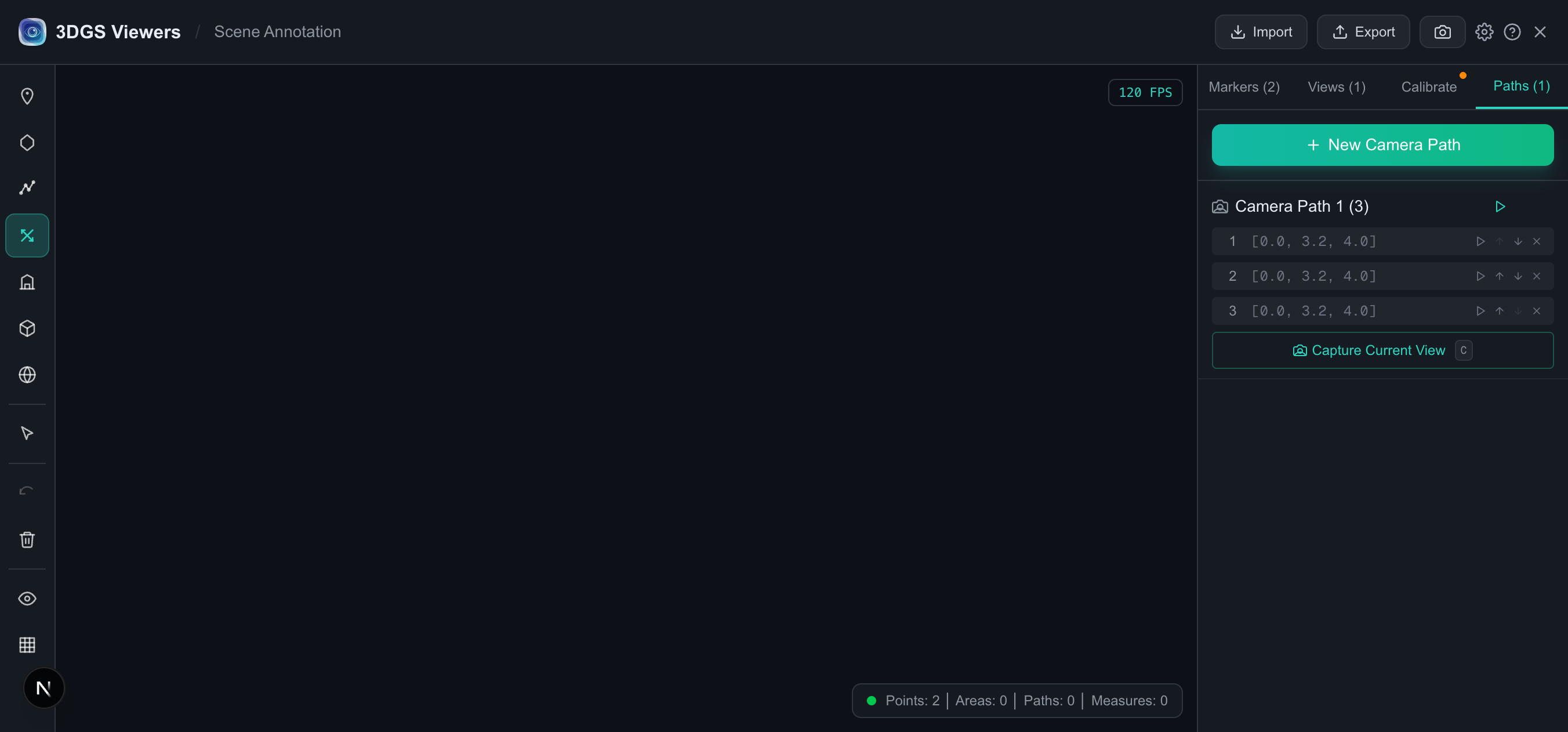
Planning Camera Paths for Gaussian Splatting Fly-Throughs
Build smooth fly-through animations from 3DGS scenes by capturing waypoints and replaying camera motion. A workflow for demos, reviews, and video export.